
Impossible Certitude
Jerusalem as the locus of ṣiddīqiyya and history-altering belief.

'Be,' and it is. - Qur’an 36:82
Your Lord says, ‘It is easy for Me.’ - Qur’an 19:21
—
Get worse, o trouble, so that you may be lifted
For your night has announced the breaking of the dawn -
al-Munfarijah, the Poem of Relief, trans. by Sulayman ibn Qiddis
There are periods in history when having faith itself begins to resemble insanity.
And Jerusalem has everything to do with that feeling.
Let me explain.
To be a believer in this time is to seem somewhat insane according to the materialist and sensory metric of our times. After all, according to basic, rational, observable calculus, all arrows point to doom, to the triumph of evil and the brutal defeat of the oppressed. The good has seemingly firmly lost this round. Palestinians are at the brink of extermination. Southern Lebanon is being erased and there are one million displaced in the Land of the Cedar Tree. Live-streamed genocide has become a permanent fixture of our daily lives. Flotilla members are openly tortured by Israel and the brutal ethno-state faces zero repercussions. Muslims are in their billions but they are under siege by impotent leaders and spiritually and mentally colonized hypnosis. Arab governments proceed shamelessly on the path of (ab)normalization, while al-Aqsa is in harms way, and the salivating plans of the callously evil Greater Israel seem well underway.
To be a believer in this time of little hope seems naïve, ridiculous even, that it is no wonder why atheists and agnostics think of people of faith as provincial, delusional or wishful thinkers. The obvious odds seem so impossibly stacked against the weak and the dispossessed that hope and faith in this time feels foolish. There seems to be no logical way out of this deadlock of repression.
But that is exactly why cultivating true belief during this time—more than ever—is so existential, so necessary: the absolute truth can never truly be defeated, erased, even if it appears to be missing according to external secularist/rational calculus.
Paradoxically, because belief is that which is most out of place in this moment of rampant immorality, it is precisely why it is imperative. In this time of endemic, systemic gaslighting, the power of the path of belief rests in its transcendence over the worlds of forms. It reigns in the realm of metaphysical, active guardianship of the truth. Materialist and secularist rationales cannot access this reality because they are self-limiting and finite, whereas the Truth is by definition, unyielding to external constructs and emotions. Hence, allyship with the truth is always superior to allyship with limited ideological, materialist, humanist or geopolitical calculus because the truth exists outside of their bounds in perpetual, unseen transcendence.
Enter ṣiddīqiyya.
Ṣiddīqiyya occupies a unique station in the Islamic imagination. This is the station that describes complete verification (taṣdīq), it is the condition of a heart so deeply rooted in truth that it is constantly and actively affirms it, even (or especially) when outward circumstances appear to contradict or negate them. To be a ṣiddīq is not merely to speaks the truth, it is to inhabit the very soul of truth.
To be a ṣiddīq is to occupy a way of being such that the Divine reality becomes more certain to them than the evidence of their one’s senses.
In Orwell’s 1984, the Party’s ultimate act of domination is forcing people to reject obvious reality. Orwell writes:
“The final, most essential command is to reject the evidence of your eyes and ears.”
For Orwell, the final act of repressive systems is represented in the destruction of truth itself. Yet the history of revelation presents another paradox, where the believer is often Divinely commanded to distrust their eyes and ears, to disbelieve appearances. Not because of some naïve denialism or delusional thinking, but because the truth is frequently concealed by the mirages of worldly tyranny.
After all, the sea before Musa looked uncrossable. The fire before Ibrahim looked deadly. Hajar’s quest for water in the scorching desert for water looked like suicide. Maryam’s immaculate birth seemed impossible. David was no match for Goliath. The Night Journey—the Mi’raj— looked like a lie. Yunus’ emergence from the belly of the whale is a tall tale. Winning at Badr was a tactical impossibility. By all worldly accounts, these narratives seemed impossible, and hence, insane.
But every age presents its own test of sight and divides people into two types: those who see with the light of belief coupled by principled action, and those who see with the deceiving eye of forms alone.
Today, Palestine and the warpath of Pax Judaica confront humanity with the gravest of collective vision tests. Outwardly, our rational senses only see undeterred evil, rubble, siege, abandonment, and unfathomable destruction. Our ears hear “experts” and naysayers explain why resistance to this leviathan is suicide, why liberation is impossible. To this camp, their arithmetic of power is settled in the external world of forms only. It privileges form > truth.
For this reason, Muslim sages have distinguished between mere truthfulness (ṣidq) and ṣiddīqiyya. There are many people speak truth on occasion, and strive to be honest and truthful. But this is not what the ṣiddīqiyya is about. The ṣiddīq is not simply an honest person, rather to be a ṣiddīq is to become truthfulness personified. The ṣiddīq’s certainty permeates their intellect, imbibes their speech, animates their actions, raises their hopes, and subdues their fears, such that they become a walking testament of truth, for truth.
To embody ṣiddīqiyya is to no longer oscillate between belief and doubt according to changing external circumstances, rather, it is to remain steadfast while the world burns. It is to hold on to the scorching embers of justice even as the whole world demands capitulation. Siddīqiyya is to depart completely from finite calculus, choosing instead to be anchored in the infinite, in the immovable, unchangeable promise of Truth. In Allah alone.
This is why the Qur’an places the rank of the ṣiddīqūn immediately after the prophets and describes them as the guarantors of revelation for any age, be it colonial modernity or the dajallic present day. The siddīq’s defining characteristic is not miraculous, charismatic power, nor immediate military victory, not even scholarly genius or credentials. Rather, the ṣiddīq’s hallmark is unseen and rests in their unwavering certitude in the impossible.

To be a ṣiddīq is to recognize truth well before it becomes conventional, before the arc of history bends towards it, when it had so few friends it could barely be recognized. For if the truth were popular, it would no longer require a station as rare as ṣiddīqiyya—prophets, knowers of God and righteous saints— to affirm it. Otherwise, we would all be the same.
Ṣiddīqiyya, therefore, is not naiveté, it is the lofty plains of the triumph of certainty over sight. It is to trust the unseen factors more deeply than the seen factors, no matter how impossible they seem. It is to taste the promise of Allah more deeply than the consensus of the age, and to affirm revelation more deeply than fickle world of forms.
And the seat of ṣiddīqiyya rests in the primordial locus of Jerusalem, al-Quds.
After all, Maryam alayha as-salam, the blessed mother of ‘Isa, Jesus—referred to as ṣiddīqa in the Qur’an— and Abu Bakr, the closest bosom fried of the Prophet, are remembered through this title. Maryam bint Imran and Abu Bakr both affirmed Prophethood as it came with impossible (and sometimes lethal) circumstances. And for both of them, this title came about through a Jerusalemite connection.
The Messiah, son of Mary, was no more than a Messenger before whom many Messengers have passed away; and his mother was a ṣiddīqa. (Ma’idah: 75)
Maryam of Jerusalem carried a child without a father and received much scorn from society for this.
And Abu Bakr gained the moniker as-Siddīq only after he affirmed the description of al-Aqsa that the Prophet ﷺ gave as a waking vision of Jerusalem appeared before him in Mecca the day after he returned from the heavenly journey that the Quryash elites mocked as a lie, as a tall tale.
Both ṣiddīqin, Maryam and Abu Bakr were asked to make a choice between “sane”, visible reality and “audacious” Divine reality, and they both chose the only path worth living and dying for: that of impossible certitude.
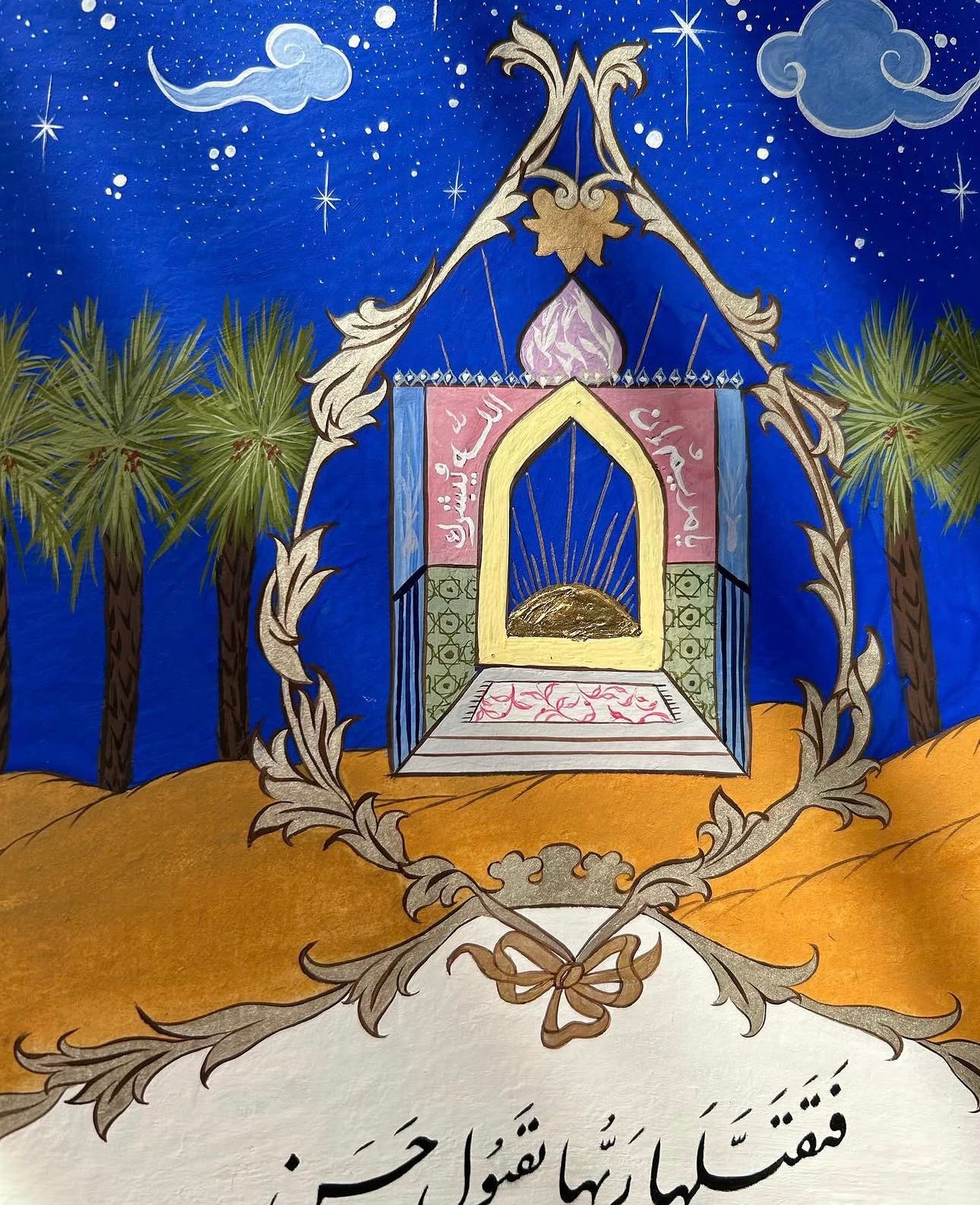
Jerusalem carries the prayerful, devotional fragrance of Maryam. Today, its walls still echo with the reverence of her worship, its sorrowful, occupied stones testify to her hunger, devotion, her childbirth, her fear and her reliance. Al-Quds perpetually reverberates with her immovable oath to truth, her Maryamic certainty.
And Abu Bakr stands as a symbol of khilafa, of Prophetic inheritance. As a continued trust and mandate. As a loyal friend to the lonely, the stranger and the persecuted.
As ṣiddīqin, their mandate is needed across the ages. Every epoch has its test of ṣiddīqiyya. Every generation encounters a moment when revelation and appearances seem to diverge. Today, many people look upon Palestine and Lebanon and the collusion of Arab rulers and see only defeat. They see siege, starvation, abandonment, and overwhelming force. They count the inaction of Muslims, the billion-dollar weapons’ deals, shady back door alliances, the impenetrable borders, and the mounting number of martyrs. They examine the existential question of Palestine through the godless arithmetic of worldly power alone.
It is through the spirit of impossible certitude that Palestine as the qudsi (holy) headquarters of universal justice-seeking and principled, prophetic resistance to tyranny, supremacy and evil.
Because the opposite of ṣiddīqiyya is another spiritual polar opposite state: that of nifaq, hypocrisy. The hallmark of a munafiq is the person who theorizes defeat, normalizes it, or makes it their job to persuade others to accept the whip of tyranny as natural, as status quo. But for free people and every human civilization whose foundations lay on the universal prophetic ethos cannot—by its own nature—accommodate defeat: it must resist till the very end. Its people must exhaust every possibility available to them, even if it means breathing through the hole of a needle. It means tapping into the seemingly evaporated reservoirs of strength, resilience, and renewal to fortify one another, as witnesses to God, their souls and humanity.
Because this path—of impossible certitude—courses through the veins of the most honorable chapters of Islamic history. After the setback of Uhud, Allah did not instruct the believers to internalize defeat. Rather, He strengthened them: “Do not lose heart, nor fall into despair, for you shall prevail if you are believers.” Likewise, when the Prophet ﷺ instructed ʿUmar to respond to the arrogant boasts of the Quraysh after the battle, ʿUmar chose to elevate the discussion beyond worldly measures of victory and loss, to the transcendental metrics of truth and justice.
The Qur’an calls each of us to the path of radical trust, to the stature of ṣiddīqiyya, by repeatedly referring to the hypocrites and rebuking their discourse. The Qur’an shows us that hypocrisy was so much more than mere military abstention, pragmatism or cowardice; it was a mechanism to demoralize the believers. The hypocrites of today question the intentions of struggling believers, they cast doubt upon their convictions and broadly label them “khawarij”, “Islamists” or “Muslim Brotherhood”, thereby internalizing colonial “war on terror” rhetoric against fellow Muslims.
Nifāq—like ṣiddīqiyya—is not confined to a particular century. It is a recurring disposition that reappears whenever communities are most severely tested.
Today, Palestinian people and every ṣiddīqi whose vision is laser sharp, who till sees al-Quds as the moral qibla of Islam, they are simply naïve believers. They “walk the walk” and show it through action. They don’t just pay lip service to the truth, they are paying the ultimate price of this prolonged battle for the sake of impossible certitude. The price they are paying is immense, sometimes too immense, beyond question. Yet the price they are paying with their conviction and certitude is a much safer path than the inward idolatry, defeatism and subjugation many Muslims have internalized as a false god.
The people of Filastin, Lebanon and others demand of us a re-orientation back to the imperative of history-altering belief, to restore the maqam (status) of ṣiddīqiyya—the scarcely trodden path of radical belief and action— for a spiritually decimated and morally emaciated age. In their steadfastness, they ask us the only question worth asking on a daily basis: whether we are true believers, if we still possess the capacity to affirm God’s promise when every visible sign appears to point elsewhere. And whether the ummah is comprised of hypocrites (munafiqin) or if it still contains men and women—siddiqin—capable of taṣdīq before seeing victory externally speaking.
Ultimately, the ṣiddīqi spirit of every “insane” person resisting monstrous evil cannot be crushed. Whether it is waving the Palestinian flag in Tehran or singing for Imam Hussain in Gaza, these times are producing a generation who will continue to deeply embarrass neoliberal modernity. How can they be crushed, when a father gathers the remains of his children and still says alhamdulilah? When a mother buries her son and speaks about the imminent reunion in jannah, that he is alive and comes to her in her dreams every night? What is this, then, if not the ultimate triumph of truth over form?
To be a ṣiddīq in this time is to be Ibrahim, as he looked at the cycles of the sun and the moon, each captivating him for a moment, yet eventually they each disappear.
“I do not love things that set,” he declares.
This statement, “I do not love things that set,” encapsulates the entire history of revelation.
To the human being, the true object of devotion must be permanent, present, and unvanquished by the elements and the passage of time. Whatever rises and falls, appears and disappears, conquers and then crumbles, cannot by its very nature serve as the ultimate measure of reality.
Empires are among the greatest of these setting stars. At one moment they seem eternal. Their armies appear invincible, their wealth inexhaustible, their narratives iron clad. Yet they occupy a horizon of superficial vision that people begin mistaking their short lived dominance for reality, forgetting that, empires, like the sun and moon, also set.
Ṣiddīqiyya begins when one refuses to worship the narrow tunnel vision of the changing horizon. We don’t worship the sunset, or the moon rise, we worship the Maker of the tides and breaker of empires. The ṣiddīq understands that transient power, however overwhelming, remains just that: transient. To be a ṣiddīq is to anchor oneself instead to the One who neither rises nor sets, neither appears nor disappears, neither weakens nor declines, neither waxes nor wanes.
This is the secret of Palestine’s endurance.
Many people look at the empire and see the sun of Pax Judaica at its zenith. The people of al-Quds look beyond the sun itself. They know that every worldly power eventually descends beneath the horizon. Al-Qahhar alone remains.
The contemporary supermacist Judeo-Christian campaign of terror against Islam and Muslims cannot comprehend this reality because it only believes in material outcomes. It is jealous of Muslim trusteeship over Jerusalem because it only understands victory through numbers, land grabs, economies, weapons, surveillance, and the double speak of the ruse-based order. Through a “might makes right” mentality.
But the people of al-Quds possess another inheritance altogether. They belong to a civilizational ethos guided by the long forgotten “right makes might” mentality. They are tied to the spirit impossible certitude tied to the very essence of Jerusalem, whose lineage is Maryam, the mother of ruh Allah, and Abu Bakr, the bosom friend of habib Allah.
Perhaps this is why the people of the book who failed their prophetic covenants are obsessed with controlling and dominating Jerusalem. Whoever controls its sacred narrative controls humanity’s very imagination of itself. The struggle over Palestine has never been territorial alone. It has always been a metaphysical struggle over the very soul of humanity. It is the litmus test for those who choose prophetic transcendence against those who ally themselves with the taghut of brute power, bloodlust, greed, and anti-human annihilation.
Jerusalem stands a timeless testimony to the fact that the greatest catastrophe of the modern Muslim condition is not military weakness, rather, it is the erosion of impossible certitude from the hearts of people, and the weakening of metaphysical certainty. Many people still pray, but many no longer believe that Allah can rupture history itself.
The end of radical belief is the greatest collective nakba of all.
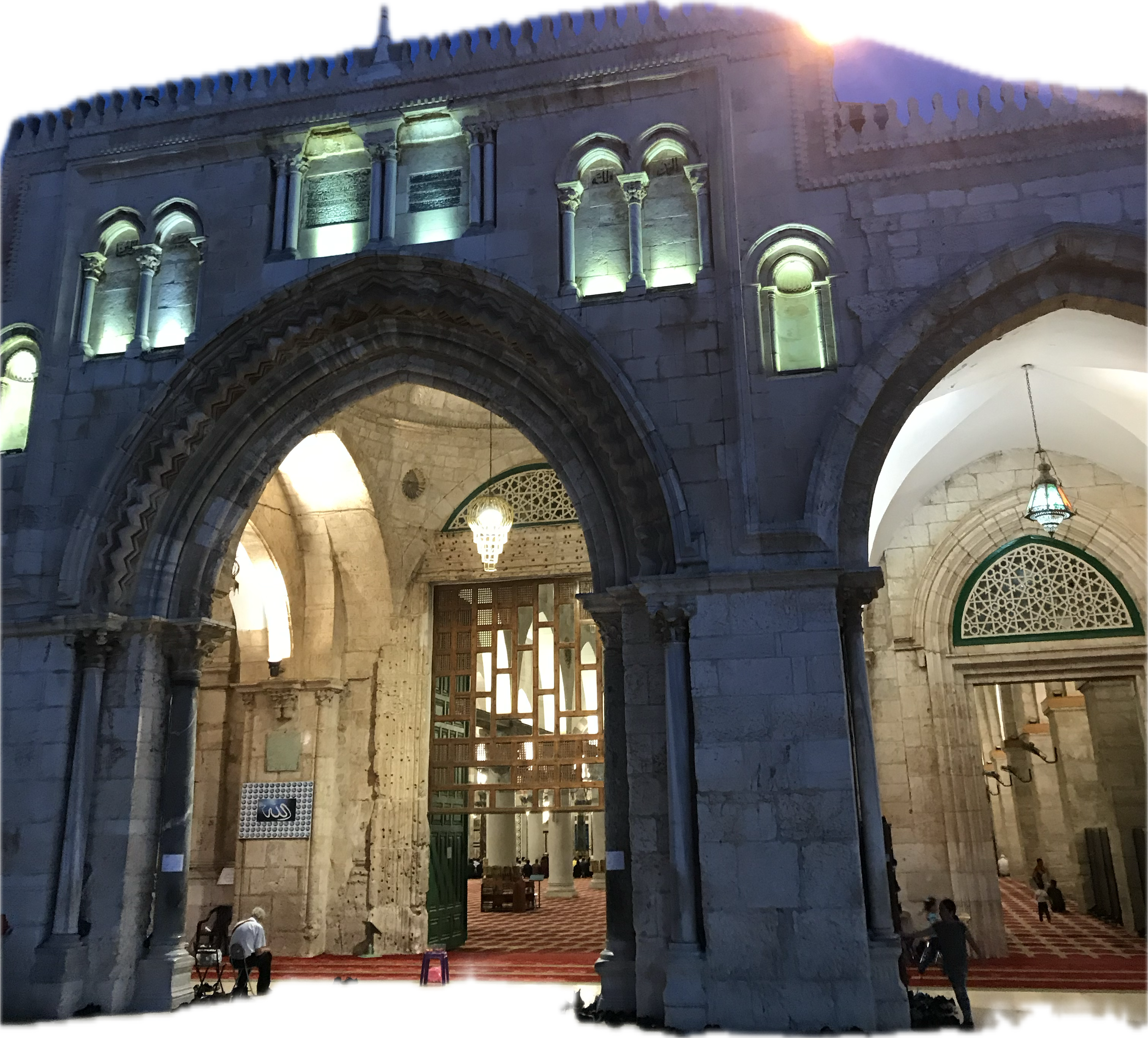
Al-Quds represents the qibla of impossible certitude. Its primordial presence grants victory to the Prophetic ethos and destroys the logic of the menacing empire. It whispers across generations that truth survives even when (or especially when) surrounded by impossible odds.
Perhaps this is why Palestine feels both unbearable and antidotal to the materialistic, cynical, modern conscience: Gaza has forced humanity to choose between two polar worldviews: the empire’s religion of tyranny of inevitability, vs. prophetic belief that Allah alone is sovereign above creation.
And perhaps that is the ultimate secret and medicine that Palestine, al-Quds, so freely gives as the locus of ṣiddīqiyya. Whoever loves it deeply and principally enough eventually finds themselves standing before the same question posed to Abu Bakr or Maryam centuries ago: will you believe your deceitful eyes and ears, or stand atop the mountain of impossible, history-altering, certitude?
Relevant past articles:

